
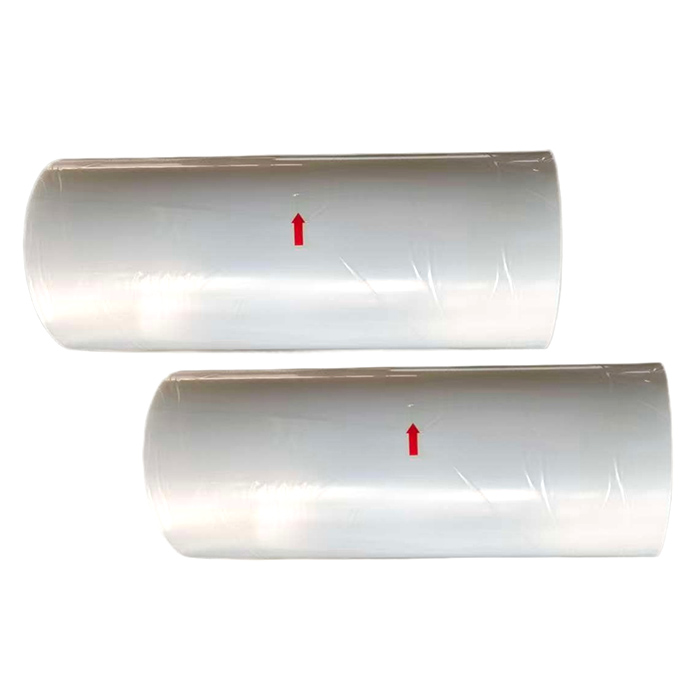
PE Heat Shrink Film
Material: Produced via the blown film process using LLDPE/LDPE polyethylene as the primary raw material.
5-Layer Co-extrusion PE Shrink Film
Features an anti-blocking outer layer and a core layer that provides shrinkage force and puncture resistance; offers superior mechanical properties and is suitable for high-speed production lines (standard for Krones and OCME beverage shrink-wrapping machines).
Key Application Scenarios (Focus on the Beverage Industry)
Multipack bundling for PET bottled beverages (core market);
PE Heat Shrink Film
Material: Produced via the blown film process using LLDPE/LDPE polyethylene as the primary raw material.
5-Layer Co-extrusion PE Shrink Film
Features an anti-blocking outer layer and a core layer that provides shrinkage force and puncture resistance; offers superior mechanical properties and is suitable for high-speed production lines (standard for Krones and OCME beverage shrink-wrapping machines).
Key Application Scenarios (Focus on the Beverage Industry)
Multipack bundling for PET bottled beverages (core market);
PE Heat Shrink Film
Material: Produced via the blown film process using LLDPE/LDPE (polyethylene) as the primary raw material.
1. Raw Material Classification and Structure,5-Layer Co-extrusion PE Shrink Film
Features an anti-blocking outer layer and a core layer that provides shrinkage force and puncture resistance. With superior mechanical properties, it is suitable for high-speed production lines (standard for Krones and OCME beverage bundling machines).
2. Core Physical Properties (Technical Specifications for Export)
(1) Shrinkage Temperature Range
Initial shrinkage: 70–80°C; Optimal shrinkage range: 110–160°C
Excessive temperature leads to film breakage or whitening; insufficient temperature results in loose shrinkage and wrinkling.
Shrinkage Rate (Key Indicator)
Machine Direction (MD): 20%–80%
Transverse Direction (TD): 20%–30%
Formulations with high MD shrinkage (60%–70%) are typically selected for beverage bundling.
Tensile Strength and Puncture Resistance
Compared to POF, PE shrink film offers superior puncture resistance, making it less prone to breakage when carrying heavy loads (e.g., full PET beverage bottles).
(2) Environmental Properties
Non-toxic and chlorine-free; combustion does not produce corrosive fumes (unlike obsolete PVC shrink films). Recyclable.
3. Common Product Forms
(1) Tubular Shrink Film (Tube film) [Most common in beverage plants]
A double-layered tubular film; the machine sleeves it directly over a group of beverage bottles, followed by sealing and a hot-air shrink tunnel.
The primary film-wrapping format for Coca-Cola and Pepsi bottling lines (e.g., 2×3 or 3×4 PET water/carbonated beverage multipacks).
Compatible equipment: Krones, OCME, and Yongchuang Tongda bundling machines.
(2) Folded Film
Tubular film folded along the centerline; suitable for small-to-medium-sized machines. (3). Single-layer flat film
Primarily used for manual heat-shrinking or with small-scale equipment; rarely used on main beverage production lines.
(4). Shrink Hood (PE hood film)
An extra-large tubular film designed to be placed over an entire pallet and heat-shrunk (pallet shrink hood).
Many overseas beverage plants use this as an alternative to pallet stretch wrap; it offers superior rain and dust protection and is widely used in large beverage warehouses across Europe and the Americas.
Note on terminology: Customers often confuse the two, but "Shrink Hood" is not the same as "Bottle group shrink film"; their specifications and formulations differ completely.
4. Standard specifications (common in the beverage industry)
Thickness range: 50μm–100μm
High-speed film wrapping machines typically use 70μm film; full-pallet shrink hoods commonly use 80–120μm film.
Width: Customized based on the dimensions of the bottle pack (e.g., 240mm, 320mm, 380mm, 430mm, 450mm, 760mm, 810mm).
Paper core: 76mm (3-inch) industrial-grade core (core quality impacts the user experience and repurchase rates).
Color: Primarily transparent; black or milky-white light-blocking packaging available upon request.
Printing: Custom printing available according to customer requirements.
5. Key application scenarios (focusing on the beverage industry)
Multipack film wrapping for PET bottled beverages (core market)
Cola, carbonated drinks, and mineral water; multi-bottle bundles without cardboard cartons (replacing cardboard handles); compatible with fully automatic film wrapping machines.
Bundled packaging for aluminum cans, bottled water (large containers), and juice.
PE Shrink Hood (pallet shrink hood)
Large overseas distribution centers for Pepsi/Coca-Cola: A shrink hood covers the entire pallet of goods, allowing for outdoor storage with protection against rain and dust. Outer packaging for construction materials, chemical drums, and bundled cartons
6. Key Distinctions (Commonly Confused in the Beverage Industry)
PE Heat-Shrink Film: Shrinks upon heating → Requires a heat-shrink oven or tunnel
PE Stretch Wrap: Stretches and retracts via external force; requires no heat
POF Shrink Film: Multilayer co-extruded polyolefin shrink film; offers superior clarity and is typically used for smaller items; PE shrink film remains the mainstream choice for bulk-wrapping heavy cases of beverages

Qingdao Huayingxin Packing Material Co.,Ltd.
No.12 Jinhuanghai Road,Daxin Town,Jimo District,Qingdao City,Shandong Province,China
Tel:0532-67722919
Fax:0532-67722919
E-mail:jack@hyxqd.com